Interview with Katja Felke
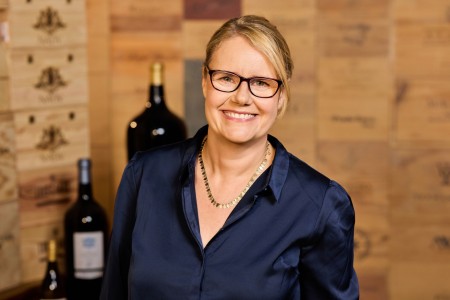
Katja Felke, Managing Director of Silkes Weinkeller, Mettmann
Where does your passion for wine come from, and what makes it so special to you?
I entered the wine industry with a background in e-commerce. My curiosity about wine has grown ever since. I want to truly understand the product we sell. The more I learn about it, the more fascinating I find it.
For me, what makes wine special is how much comes together in a single glass: origin, climate, craftsmanship and the decisions made by the people behind it. You can study it in great depth and still be surprised time and time again. And then you sit down at the table with others, open a bottle, and all these stories come together to create a shared moment.
What is your favourite European wine?
I find it hard to pick just one favourite wine. There are too many exciting wines out there, and there’s always something new to discover.
Besides, my choice depends on the occasion: what are we eating, who am I with, and what I’m in the mood for at that moment? So, my favourite wine is certainly bound to change from time to time.
With so many European wine-growing regions, do you have a favourite?
Austria is right up there for me. I’m fascinated by the diversity of the wines and the strong individual character you can discover there. In my view, Austrian wines still don’t receive the recognition they deserve in Germany.
That said, I wouldn’t want to limit myself to just one wine-growing region. There are exciting discoveries to be made almost everywhere. How could one possibly choose?
Which wine-growing region in Europe do you currently consider to be an insider’s tip or one on the rise?
When it comes to underrated wine regions, I’d mention Austria again. In my view, there’s still plenty of potential to get more people excited about these wines.
Beyond that, I find wine- producing countries such as Moldova and Georgia fascinating. At a recent tasting of Moldovan wines, I once again experienced how much there is to discover beyond the familiar origins. Rather than naming a single hidden gem, I would encourage people to remain curious and occasionally choose a bottle from a region they know little about.
Regarding your professional role: As Managing Director of Silkes Weinkeller, what are the key issues and trends you are currently facing?
A key question for me is: How do we get people excited about wine online and build lasting customer relationships? This involves a good selection, clear advice and reliable service. But it’s also about adding an emotional dimension to the product. Wine has so many stories to tell, which we can bring to life digitally.
That’s why we’re focusing on ‘Winetainment’, the combination of wine and entertainment, as well as social commerce and live shopping. How can customers discover new wines, share their experiences and have fun doing so? Particularly in the premium segment, we need to convey what makes a wine special and why it’s worth the price.
At the same time, we must operate profitably and efficiently. AI and the further development of our processes play a central role here, from procurement and logistics right through to marketing and customer service. My role is to bring these developments together and, together with the team, put them into practice in our day-to-day operations.
Online is your ‘day-to-day business’. AI is transforming business and work processes. To what extent is this already evident at Silkes Weinkeller, or is it being actively utilised?
AI has now become an integral part of our core business processes. We’re already using it to create content and images, but that’s only a small part of it. We also use AI to support the management of logistics and procurement. In customer service, we’re currently building an AI layer to support our team in handling enquiries.
Another key area is our product database. Here, we use AI to make product knowledge available for better customer advice. In marketing, it helps us identify current search trends and tailor our content and offers more effectively to individual channels and target groups.
We are still a long way from reaching the end of this journey. Our ambition goes beyond simply optimising individual existing processes. We are also considering how we can redesign processes using the capabilities of AI, so that in the medium term we can work more efficiently and consistently from the customer’s perspective. To achieve this, we need not only the technology but also the knowledge and experience of our staff.
Let’s move on from day-to-day online business to our presence at trade fairs such as EUROVINO. How important is this for your business operations?
Face-to-face interaction is very important for our online business. We can taste wines together, speak to the producers and gain a better understanding of the people and ideas behind them. This knowledge helps us later on to present the wines to our customers in a compelling way.
It’s long since been about more than just purchasing. We discuss collaborations, joint projects and how we can support one another. Exchanging experiences with other retailers is also valuable: Which approaches work? What challenges do we share? Where can we make a difference together?
EUROVINO provides a framework for this that I really like. Its size allows for personal encounters and gives space for conversation. Added to this is an interesting supporting programme that offers further opportunities to strike up conversations with one another.
You are now an advisory board member at EUROVINO yourself. What appeals to you about this role, and what aspects would you like to bring to the collaboration?
I am drawn to the opportunity to help shape a trade fair format whilst bringing the perspective of digital retail to the table. I come from a background in e-commerce and deal with how people discover, select and buy wine on a daily basis. For me, this also includes customer loyalty, adding an emotional dimension to the product and the possibilities offered by AI.
I’d like to combine this experience with the perspectives of the other advisory board members. How can we reach new target groups? What support do producers and retailers need when it comes to marketing? And which formats encourage an exchange that leads to concrete collaboration?
In doing so, I’d also like to maintain the personal connection that I appreciate about EUROVINO. A good trade fair creates space for encounters and provides inspiration that we can then put to use in our businesses.
Why is EUROVINO, as a trade fair format focusing on the German-speaking market, important for the industry?
We are seeing just how challenging sales are at the moment, particularly for German wines. As retailers, we have a responsibility to take action to counter this: to tap into new target groups, improve communication and select the right wines for each customer.
For me, ‘selling better’ means conveying origin, craftsmanship and unique characteristics in a way that is both understandable and engaging. To do this, we need good stories and a clear understanding of what appeals to each target group.
That is precisely why a platform for direct exchange is so important. When producers and retailers work together to consider how to reach customers, opportunities arise that neither would perhaps have developed on their own. These can take the form of collaborations, joint campaigns or new marketing approaches. The focus on the German-speaking sales market provides these discussions with a concrete, shared foundation.
What is it that makes EUROVINO special for you personally?
The conversations, the discoveries and the personal atmosphere. I like the fact that the size of the fair fosters a sense of closeness and allows you to find the time to have proper discussions. The interesting supporting programme complements this very well for me. I’d like to come away with new ideas and contacts that will lead to something concrete.
And EUROVINO has also come to hold a special personal significance for me: it was there that Silkes Weinkeller was named ‘Wine Retailer of the Year 2026’ in the online retail category at the Fair Wine Awards*. We were absolutely delighted about this as a team. That’s something that really sticks in the memory, of course.
*Editor’s note: Renamed ‘Future Wine Awards’ in September 2026
Photo Katja Felke by Manuel Thomé